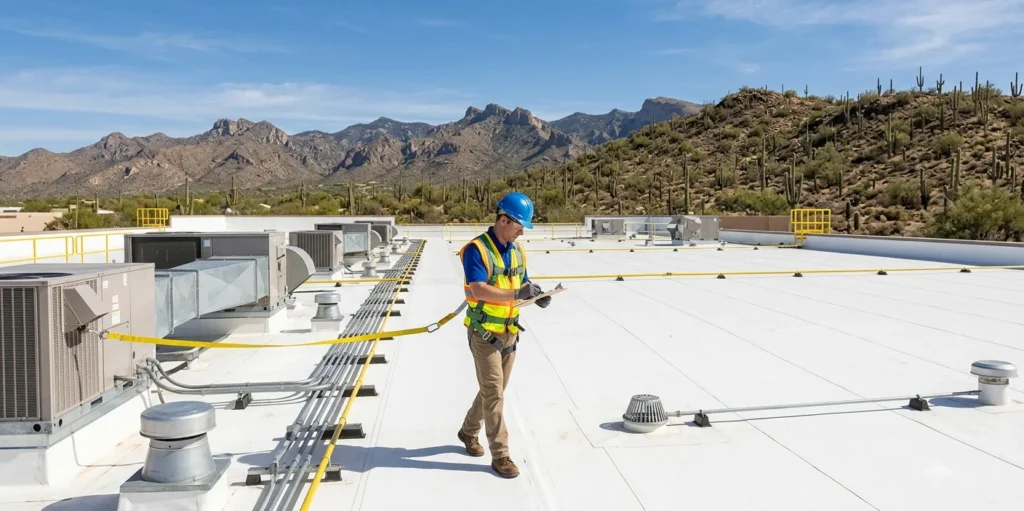
Introduction: Why Commercial Roof Maintenance Matters
A commercial roof is one of the hardest-working parts of any building. Every day, it shields employees, customers, equipment, and inventory from harsh weather, sunlight, wind, and moisture. While many building owners focus on maintaining HVAC systems or landscaping, the roof often receives attention only after a leak appears.
That approach can shorten a roof’s lifespan.
Routine maintenance is one of the most effective ways to keep a commercial roof performing as intended for years. Regular inspections, cleaning, and minor repairs help reduce damage caused by weather and everyday wear. Instead of waiting for visible problems, property owners can address small issues before they develop into significant concerns.
For businesses researching commercial roofing Tucson, understanding the value of preventive maintenance is especially important. Tucson’s intense sun, seasonal monsoon storms, and wind-driven debris create unique challenges that require ongoing attention.
This guide explains how commercial roofing maintenance works, why it matters, and what building owners should know to maximize the lifespan of their roofing systems.
What Is Commercial Roofing Maintenance?
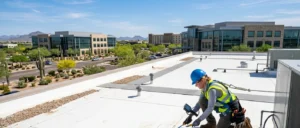
Commercial roofing maintenance refers to the routine inspection, cleaning, monitoring, and repair of a commercial roof to keep it functioning properly throughout its service life.
Think of your roof like a vehicle. Regular oil changes help an engine last longer. In the same way, scheduled roof maintenance helps preserve roofing materials before major problems develop.
Preventive Maintenance vs. Reactive Repairs
Preventive maintenance focuses on stopping problems before they occur.
Reactive repairs happen only after damage becomes visible.
Preventive maintenance typically includes:
- Scheduled inspections
- Debris removal
- Drain cleaning
- Flashing inspections
- Minor repairs
- Sealant maintenance
Reactive repairs often involve:
- Leak repairs
- Water damage restoration
- Emergency storm repairs
- Structural corrections
Waiting until damage appears usually means the problem has existed for some time.
Why Maintenance Is More Than Just Fixing Leaks
Leaks are only one symptom of roof deterioration.
Many roofing issues develop beneath the surface, including moisture infiltration, membrane separation, loose fasteners, and deteriorating flashing. Regular maintenance identifies these conditions before they become visible inside the building.
How Commercial Roofs Naturally Age
Even the highest-quality roofing systems experience gradual wear over time.
Several environmental factors contribute to this process.
Weather Exposure
Sunlight continuously breaks down roofing materials through ultraviolet radiation.
Rain introduces moisture.
Wind carries debris across roofing surfaces.
Dust accumulates in drainage systems.
Every season leaves its mark.
Daily Wear and Tear
Commercial roofs often support:
- HVAC equipment
- Satellite systems
- Solar panels
- Maintenance personnel
Frequent foot traffic increases stress on roofing materials.
Without routine inspections, these areas become vulnerable to premature deterioration.
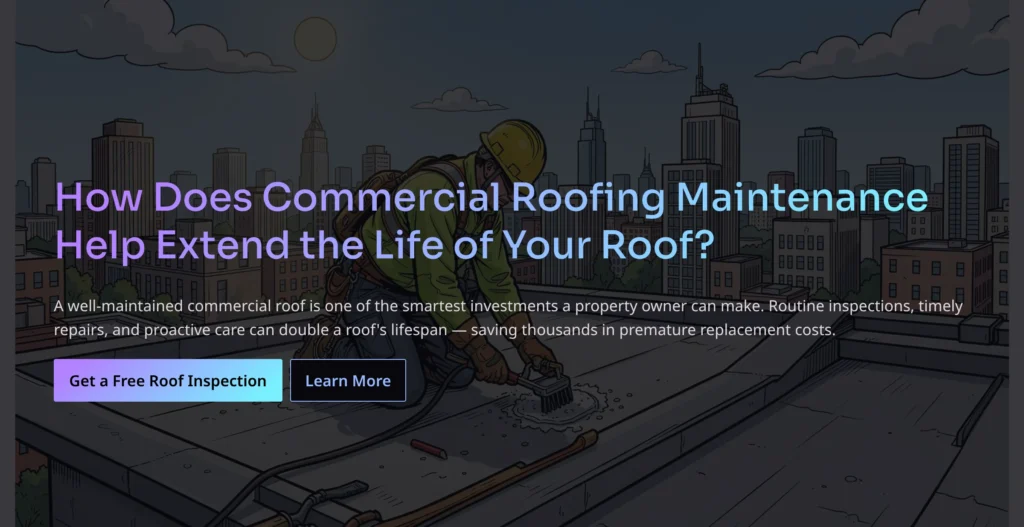
How Regular Maintenance Extends Roof Lifespan
Maintenance slows the aging process by addressing small concerns before they expand.
Preventing Minor Issues from Becoming Major Problems
A loose seam today may become tomorrow’s roof leak.
A clogged drain today could become standing water next month.
Routine maintenance catches these issues early.
Preserving Roofing Materials
Roof membranes, coatings, sealants, and flashing naturally deteriorate.
Maintenance helps preserve these components through cleaning, resealing, and timely repairs.
Protecting Structural Components
Moisture that penetrates roofing materials eventually reaches insulation and structural decking.
Keeping water out protects the entire roofing assembly—not just the surface.
What Does a Commercial Roofing Maintenance Program Include?
Every building has unique needs, but most maintenance programs share several common elements.
Routine Roof Inspections
Inspections identify:
- Loose seams
- Membrane punctures
- Cracks
- Aging sealants
- Drainage concerns
These evaluations establish a baseline for future maintenance.
Drainage System Cleaning
Leaves, dirt, gravel, and debris frequently block drains.
Poor drainage increases the risk of standing water.
Clean drains allow water to exit the roof efficiently.
Flashing and Seal Inspection
Flashing protects vulnerable areas around:
- Roof edges
- Skylights
- HVAC units
- Pipes
- Roof penetrations
Inspecting these areas helps maintain watertight seals.
Membrane Condition Assessment
Commercial roofing membranes should remain flexible and intact.
Maintenance professionals look for:
- Tears
- Blisters
- Shrinkage
- Surface deterioration
Common Commercial Roofing Problems Maintenance Can Prevent
Routine inspections help identify developing issues long before they interrupt business operations.
Water Ponding
Standing water places constant pressure on roofing materials.
Over time, this weakens membranes and increases leak potential.
Membrane Damage
Sharp debris, foot traffic, and weather can puncture roofing membranes.
Early repairs prevent moisture infiltration.
Flashing Failures
Flashing often fails before the roofing membrane itself.
Inspecting flashing regularly helps maintain roof integrity.
Mold and Moisture Intrusion
Hidden moisture encourages mold growth within insulation and interior building materials.
Keeping the roof watertight minimizes these risks.
How Weather in Tucson Affects Commercial Roofs
Buildings in southern Arizona face conditions unlike many other regions.
Anyone researching commercial roofing Tucson should understand these environmental challenges.
Intense UV Exposure
Tucson receives abundant sunshine throughout the year.
Constant UV exposure gradually dries roofing materials and accelerates aging.
Monsoon Storms
Heavy rainfall can overwhelm clogged drainage systems.
Strong winds may lift roofing components or scatter debris.
Wind-Blown Debris
Dust, branches, gravel, and other debris accumulate on rooftops during windy conditions.
Regular cleaning reduces unnecessary wear.
Temperature Fluctuations
Roof surfaces expand during hot afternoons and contract after sunset.
Repeated movement places stress on seams and flashing.
Signs Your Commercial Roof Needs Immediate Attention
Some warning signs should never be ignored.
These include:
- Interior water stains
- Visible roof sagging
- Standing water
- Loose flashing
- Cracked sealant
- Membrane punctures
- Increased energy bills
- Mold odors
- Ceiling discoloration
- Missing roofing components
Prompt evaluation helps prevent more extensive damage.
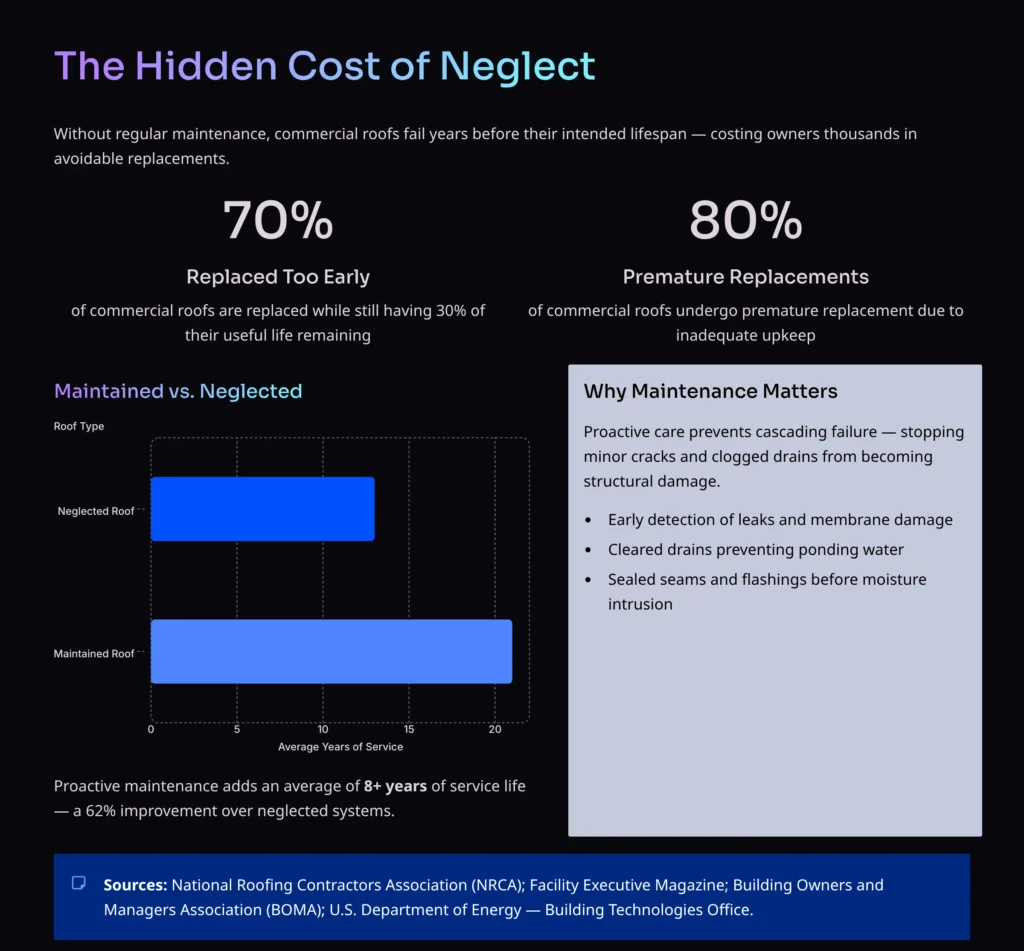
Best Practices for Long-Term Commercial Roof Performance
A long-lasting roof depends on consistent care.
Recommended practices include:
- Schedule inspections twice each year.
- Inspect after major storms.
- Keep drains clear.
- Limit unnecessary rooftop traffic.
- Address minor damage promptly.
- Document maintenance activities.
- Remove debris regularly.
- Monitor roof-mounted equipment.
Consistency often matters more than complexity.
The Role of Professional Roof Inspections
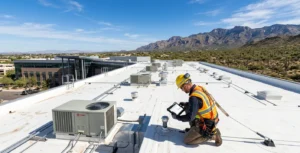
While facility managers can perform basic visual observations, professional inspections provide a more comprehensive assessment.
Experienced roofing professionals understand how different roofing systems age and where problems typically develop first.
Inspection reports often include:
- Photographs
- Condition summaries
- Maintenance recommendations
- Repair priorities
- Documentation for future planning
These records help building owners make informed maintenance decisions.
Companies such as Royal Reliable Roofing emphasize thorough inspections because identifying issues early supports better long-term roof performance and helps building owners plan maintenance strategically rather than reacting to unexpected problems.
How Maintenance Supports Building Safety and Operations
Roof maintenance benefits more than just the roofing system.
It also supports:
- Employee safety
- Inventory protection
- Equipment reliability
- Indoor comfort
- Energy efficiency
- Business continuity
A well-maintained roof helps reduce disruptions caused by leaks or weather-related damage.
Commercial Roofing Maintenance Myths
Several misconceptions prevent building owners from prioritizing maintenance.
Myth 1: No Leak Means No Problem
Many roofing issues remain hidden until damage becomes extensive.
Myth 2: New Roofs Don’t Need Maintenance
Even recently installed roofs benefit from regular inspections.
Small installation-related concerns can often be corrected early.
Myth 3: Maintenance Is Only Necessary After Storms
Weather is only one source of roof wear.
Daily exposure also contributes to gradual deterioration.
Myth 4: Visual Checks Are Enough
Surface observations cannot always reveal hidden moisture or developing membrane issues.
Professional inspections provide a more complete picture.
Choosing an Experienced Commercial Roofing Partner
Selecting a knowledgeable roofing professional supports effective long-term maintenance.
When evaluating providers, consider factors such as:
- Experience with commercial roofing systems
- Knowledge of local climate conditions
- Comprehensive inspection procedures
- Preventive maintenance programs
- Clear documentation
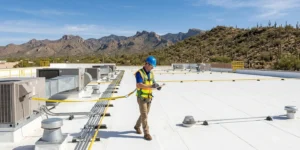
- Safety practices
- Ongoing communication
For property owners exploring commercial roofing Tucson, working with professionals who understand the region’s intense heat, UV exposure, and seasonal monsoons can contribute to more effective maintenance planning. Providers like Royal Reliable Roofing focus on helping businesses understand roof conditions and prioritize preventive care, allowing owners to make informed decisions based on the needs of their specific roofing system.
Royal Reliable Roofing Serving Harold Bell Wright Estates and Beyond in Tucson
Royal Reliable Roofing proudly serves businesses throughout Tucson, including the Harold Bell Wright Estates neighborhood. Conveniently located near Banner Rehabilitation Hospital Tucson and the intersection of E Paseo San Ciro and N Wilmot Road (32.223146403452525, -110.85747652845407), we provide dependable commercial roofing services for commercial properties across the area.
Our team understands the unique roofing challenges that Tucson businesses face, from intense UV exposure and extreme summer temperatures to seasonal monsoon storms. We are committed to delivering high-quality commercial roofing solutions that help protect your property and support the long-term performance of your roof.
Get Commercial Roofing Services in Harold Bell Wright Estates
If your commercial property in Harold Bell Wright Estates needs roof inspections, preventive maintenance, repairs, roof replacement, or a new commercial roofing system, Royal Reliable Roofing is here to help. We focus on providing reliable workmanship, durable roofing solutions, and exceptional customer service for businesses throughout Tucson.
Call Royal Reliable Roofing Today
For trusted commercial roofing services in Harold Bell Wright Estates and the surrounding Tucson area, call +1 (520) 677-1863 to speak with our team or learn more about your roofing options.
Navigate from Harold Bell Wright Estates to Royal Reliable Roofing
Use the following Google Maps link for directions from Harold Bell Wright Estates to Royal Reliable Roofing:
Conclusion
Commercial roofing maintenance is not simply about fixing problems—it is about preventing them. Every inspection, drain cleaning, flashing check, and minor repair contributes to extending the service life of the roofing system while protecting the building beneath it.
Because commercial roofs face continuous exposure to weather, temperature changes, and daily operational demands, even small maintenance tasks can make a meaningful difference over time. For businesses interested in commercial roofing Tucson, understanding how local environmental conditions affect roofing systems is an essential part of responsible property management.
By adopting a proactive maintenance strategy and partnering with experienced professionals such as Royal Reliable Roofing, building owners can better preserve roof performance, support building safety, and reduce the likelihood of unexpected roofing issues—all without waiting for visible damage to appear.
Frequently Asked Questions
1. How often should a commercial roof be inspected?
Most commercial roofs should be professionally inspected at least twice a year, typically in the spring and fall, as well as after severe storms or unusual weather events.
2. Can routine maintenance really extend the lifespan of a commercial roof?
Yes. Regular maintenance helps identify and address minor issues before they develop into significant damage, allowing roofing materials and structural components to remain in better condition for longer.
3. What are the biggest threats to commercial roofs in Tucson?
Common challenges include prolonged UV exposure, extreme summer temperatures, monsoon rains, strong winds, and wind-blown debris, all of which can accelerate roof wear if not properly managed.
4. What areas are typically checked during a commercial roof inspection?
A professional inspection generally includes the roofing membrane, flashing, seams, drainage systems, roof penetrations, sealants, rooftop equipment, and signs of moisture intrusion or structural concerns.
5. Why is preventive maintenance better than waiting for repairs?
Preventive maintenance focuses on detecting small concerns early, helping preserve the roofing system, reduce the risk of leaks, maintain building operations, and support the roof’s overall longevity.